
 My experience with HBO is pretty limited. As a senior in college my roommates and I decided it would be worth an extra eight dollars a month for the four HBO channels, mainly because we wanted to watch (big surprise) "The Sopranos," although the access to potentially limitless movies, at the time, seemed a plus.
Well, four years later and I haven't exactly missed HBO, although to be fair, access to DVD's of entire seasons of programs is a big reason why I'm not exactly heartbroken. DVD access to great shows like "The Sopranos" and "Deadwood" (the only two HBO dramas I'm qualified to talk about) provides anyone with Netflix the opportunity to allow HBO's true strength to overshadow its weakest link (thirty showings a week of "Norbit," for instance).
The purpose behind today's blog is to examine what I think is the most interesting issue regarding how the public views HBO's original programming. To do so I'll be looking at both "The Sopranos" and "Deadwood," two critically acclaimed dramas which both ended their runs in the last two years. Both shows were beloved by their fans and critics alike, and both shows ended in unexpected and, for most fans, disappointing ways. Not surprisingly (at least to me), it seems that the reason so many people came to love these shows is the same reason they ended up hating their conclusions. Let me explain.
First of all, it would be idiotic of me to go on in length to review and/or proselytize on the conclusion to "The Sopranos." Everyone in the history of blogging already has a theory and I'd only be the last in line to put in my two cents. I've linked to it before in this space, but I don't think I could say it better than Bob Harris already has (especially since I have actually not seen the entire episode). The bottom line: Sorry, but Tony Dies.

I would, however, like to spend a few minutes walking my way to the conclusion of "Deadwood," the HBO series that ended, after three seasons, in 2006. I watched all three seasons on DVD this summer, and finished the concluding series with my friend Zac three weeks ago. The show takes place during the early history of Deadwood, North Dakota, a gold-rush town that sprung up after the Civil War in American Indian territory and enjoyed modest prosperity until several fires and the end of the rush turned it mostly into a ghost town. The series' creator David Milch, choose Deadwood's early history because he wanted to examine how societies spring up from nothingness. Deadwood was a good vehicle for this (perhaps even better than Rome, which was used in another HBO series), as the town began as a settlement outside of the United States' jurisdiction before quickly getting gobbled up by the government as the nation's leaders saw it making money and holding a potential for vast profits from the gold trade.
The show centers around the exploits of a huge ensemble cast, led by Al Swearengen (Ian McShane) as the pimp/landlord/realtor/thief/murderer everyone loves to hate (then eventually, and strangely, hates to love), Seth Bullock (Timothy Olyphant), an ex-lawman from Montana who soon realizes that the absence of law doesn't necessary eliminate the need for lawmen and moral arbiters, and Alma Garret (Molly Parker), an East-coast wife whose intelligence and street smarts slowly reveals itself after the dubious death of her idiot husband. Each of these characters is surrounded by dozens of significant supporting players, villains, and external issues that dominated life in the "real" Wild West. In a quick synopsis, season one examines life in a lawless community; season two examines how law develops in a lawless vacuum, and season three examines how even the cool and the well-meaning will eventually get run roughshod over by the Fat Cats (either of consumerism or politics; often both).
"Deadwood" is an easy show for a guy like me to like. It's a Western, for one. It's got violence, yes, but more importantly, it's got tough guys talking tough, which has always been the true essence of a great Western. What the critics loved, at least at first, about "Deadwood" was that it took a topic that has been done to death, the Western, and re-invented in a way that seemed both different and much more realistic. That quality has become the hallmark of nearly all HBO shows; take a dead horse and make it look like a zebra with horns.
"Deadwood" jumped out of the gate with all the best "zebra" qualities; it was dirtier, nastier, meaner, and more profane than anything John Wayne would have been a party to. The first episode began with a crazy conversation and the most bizarre form of law enforcement ever put to film. Check out the clip (warning: there's some serious swearing in "Deadwood"):
Still, "Deadwood" has its problems as well. Although it tried very hard to have that creative "Sopranos" quality, it was far more inconsistent. While everything looked cool, not everything had two, or even three, symbolic meanings like "The Sopranos" often pulled off. Sometimes it felt like "Deadwood" was just trying to be cool for coolness sake (the proverbial "trying too hard" problem). Additionally, while the show often strove to be unique, sometimes it came off as phony. There is no better example than its use of graphic language (which even got a rebuke from HBO). While I certainly don't doubt that men living in a hard world made up predominately of hard men used extremely strong language, I doubt that their strong language sounded like your average 21st-century factory worker (this has been addressed by other sources). I'm probably just nitpicking, but at times the show seems more unique than authentic. Its not a huge problem (heck, I'd take unique eight days out of seven), but it does probably make it a second-tier HBO show.
Still, "Deadwood" has its problems as well. Although it tried very hard to have that creative "Sopranos" quality, it was far more inconsistent. While everything looked cool, not everything had two, or even three, symbolic meanings like "The Sopranos" often pulled off. Sometimes it felt like "Deadwood" was just trying to be cool for coolness sake (the proverbial "trying too hard" problem). Additionally, while the show often strove to be unique, sometimes it came off as phony. There is no better example than its use of graphic language (which even got a rebuke from HBO). While I certainly don't doubt that men living in a hard world made up predominately of hard men used extremely strong language, I doubt that their strong language sounded like your average 21st-century factory worker (this has been addressed by other sources). I'm probably just nitpicking, but at times the show seems more unique than authentic. Its not a huge problem (heck, I'd take unique eight days out of seven), but it does probably make it a second-tier HBO show.
Which brings us back to the issue at hand - why people love HBO shows but always hate how they conclude. It is in this feature that both "The Sopranos" and "Deadwood" share a somewhat similar complaint. Basically, that neither shows ended with the action-packed definitively jaw-dropping conclusion their fans desired.
I find it a funny complaint, because the things that made both shows so memorable in the first place (their uniqueness, their strange take on familiar topics - gangsters and Westerns, their bizarre plot twists), is exactly, in the end, the reason why people ended up so upset with their conclusions.
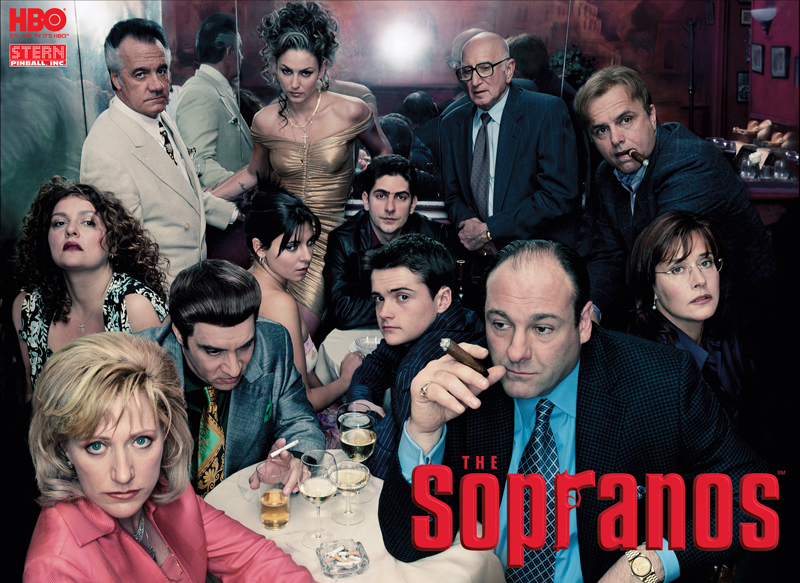 Take "The Sopranos," which is a much better example due to its unquestionable greatness (I think its conclusion, for the record, is brilliant. I won't argue about this). The first episode of "The Sopranos" was made famous for the "duck scene," which drew so much attention because it was the last thing anyone would expect in a program about gangsters, yet it was exactly what got "The Sopranos" noticed. It was that kind of creative "real world" perspective that made the show a hit. It was far, far from the graphic violence of "Scarface," yet "Scarface" is exactly what the fans were hoping for when the show came to an end. Instead, they got a nuanced, brilliantly staged, open-ended puzzle. The ending of "The Sopranos" is probably one of the best produced five minutes of television ever, and yet all most fans of the show said was that it sucked. It didn't; it was merely doing what HBO does best - provide a unique view on a not-so-unique idea.
I was thinking about HBO's fans' love/hate relationship with the channel's shows as Zac and I were watching the final 10 minutes of "Deadwood." I kept checking the timer on the DVD player, wondering when the big shoot out was going to happen. Zac and I had spent the final four episodes talking about how cool it was going to be to watch George Hearst (Gerald McRaney) finally get what he had coming to him. Well, surprise surprise. George Hearst (father of William Randolph Hearst) wasn't going to get what "he had coming to him." There was no big shoot-out, there was no big send-off. There was merely a realistic ending that proved the point Milch was always trying to make; that when society is built, the big dogs always end up on top. Nothing exciting, just a unique realism. It was the same realism that drew me into "Deadwood" in the first place.
Unfortunately, television viewers only want uniqueness at the beginning of their shows - they want their endings to be, well, a dead horse.


3 comments:
Hey BP,
Good analysis here. We've already discussed much of our feelings. And the more I get away form Deadwood the more I agree with what we saw. Let's face it - most of life is boring. There are ups and downs and usually most stuff never gets 100% resolved and that's why HBO produces good stuff. I think part of the problem is that we come from the movie generation (the 80's early 90's) where everything got resolved within a few hour time frame. And usually the endings were ones satisfying to the viewer. And I think sometimes they are insulting, but at least they make you not feel so unsure. And I think that is what I hate most about Sopranos and Deadwood. They make me and probably others feel unsure. We're unsure about where we're supposed to go from here. We just invested a lot of time into a show that makes us unsure if it was worth it. Stepping back from it seems worth it. But yet, was it?
Great writing, Ben!
You must take after your grandparents.
Love,
Mom
We must make sure we don't lose Curb Your Enthusiasm.
http://dreadnaught.wordpress.com/2007/09/08/curb-your-enthusiasm-returns-to-hbo-for-sixth-season-on-9-sep-07/
yojoe
Post a Comment