Monday, July 30, 2007

Why We Love/Hate HBO Programs

My experience with HBO is pretty limited. As a senior in college my roommates and I decided it would be worth an extra eight dollars a month for the four HBO channels, mainly because we wanted to watch (big surprise) "The Sopranos," although the access to potentially limitless movies, at the time, seemed a plus.

Well, four years later and I haven't exactly missed HBO, although to be fair, access to DVD's of entire seasons of programs is a big reason why I'm not exactly heartbroken. DVD access to great shows like "The Sopranos" and "Deadwood" (the only two HBO dramas I'm qualified to talk about) provides anyone with Netflix the opportunity to allow HBO's true strength to overshadow its weakest link (thirty showings a week of "Norbit," for instance).

The purpose behind today's blog is to examine what I think is the most interesting issue regarding how the public views HBO's original programming. To do so I'll be looking at both "The Sopranos" and "Deadwood," two critically acclaimed dramas which both ended their runs in the last two years. Both shows were beloved by their fans and critics alike, and both shows ended in unexpected and, for most fans, disappointing ways. Not surprisingly (at least to me), it seems that the reason so many people came to love these shows is the same reason they ended up hating their conclusions. Let me explain.

First of all, it would be idiotic of me to go on in length to review and/or proselytize on the conclusion to "The Sopranos." Everyone in the history of blogging already has a theory and I'd only be the last in line to put in my two cents. I've linked to it before in this space, but I don't think I could say it better than Bob Harris already has (especially since I have actually not seen the entire episode). The bottom line: Sorry, but Tony Dies.

I would, however, like to spend a few minutes walking my way to the conclusion of "Deadwood," the HBO series that ended, after three seasons, in 2006. I watched all three seasons on DVD this summer, and finished the concluding series with my friend Zac three weeks ago. The show takes place during the early history of Deadwood, North Dakota, a gold-rush town that sprung up after the Civil War in American Indian territory and enjoyed modest prosperity until several fires and the end of the rush turned it mostly into a ghost town. The series' creator David Milch, choose Deadwood's early history because he wanted to examine how societies spring up from nothingness. Deadwood was a good vehicle for this (perhaps even better than Rome, which was used in another HBO series), as the town began as a settlement outside of the United States' jurisdiction before quickly getting gobbled up by the government as the nation's leaders saw it making money and holding a potential for vast profits from the gold trade.

The show centers around the exploits of a huge ensemble cast, led by Al Swearengen (Ian McShane) as the pimp/landlord/realtor/thief/murderer everyone loves to hate (then eventually, and strangely, hates to love), Seth Bullock (Timothy Olyphant), an ex-lawman from Montana who soon realizes that the absence of law doesn't necessary eliminate the need for lawmen and moral arbiters, and Alma Garret (Molly Parker), an East-coast wife whose intelligence and street smarts slowly reveals itself after the dubious death of her idiot husband. Each of these characters is surrounded by dozens of significant supporting players, villains, and external issues that dominated life in the "real" Wild West. In a quick synopsis, season one examines life in a lawless community; season two examines how law develops in a lawless vacuum, and season three examines how even the cool and the well-meaning will eventually get run roughshod over by the Fat Cats (either of consumerism or politics; often both).

"Deadwood" is an easy show for a guy like me to like. It's a Western, for one. It's got violence, yes, but more importantly, it's got tough guys talking tough, which has always been the true essence of a great Western. What the critics loved, at least at first, about "Deadwood" was that it took a topic that has been done to death, the Western, and re-invented in a way that seemed both different and much more realistic. That quality has become the hallmark of nearly all HBO shows; take a dead horse and make it look like a zebra with horns.

"Deadwood" jumped out of the gate with all the best "zebra" qualities; it was dirtier, nastier, meaner, and more profane than anything John Wayne would have been a party to. The first episode began with a crazy conversation and the most bizarre form of law enforcement ever put to film. Check out the clip (warning: there's some serious swearing in "Deadwood"):


Still, "Deadwood" has its problems as well. Although it tried very hard to have that creative "Sopranos" quality, it was far more inconsistent. While everything looked cool, not everything had two, or even three, symbolic meanings like "The Sopranos" often pulled off. Sometimes it felt like "Deadwood" was just trying to be cool for coolness sake (the proverbial "trying too hard" problem). Additionally, while the show often strove to be unique, sometimes it came off as phony. There is no better example than its use of graphic language (which even got a rebuke from HBO). While I certainly don't doubt that men living in a hard world made up predominately of hard men used extremely strong language, I doubt that their strong language sounded like your average 21st-century factory worker (this has been addressed by other sources). I'm probably just nitpicking, but at times the show seems more unique than authentic. Its not a huge problem (heck, I'd take unique eight days out of seven), but it does probably make it a second-tier HBO show.

Which brings us back to the issue at hand - why people love HBO shows but always hate how they conclude. It is in this feature that both "The Sopranos" and "Deadwood" share a somewhat similar complaint. Basically, that neither shows ended with the action-packed definitively jaw-dropping conclusion their fans desired.
I find it a funny complaint, because the things that made both shows so memorable in the first place (their uniqueness, their strange take on familiar topics - gangsters and Westerns, their bizarre plot twists), is exactly, in the end, the reason why people ended up so upset with their conclusions.
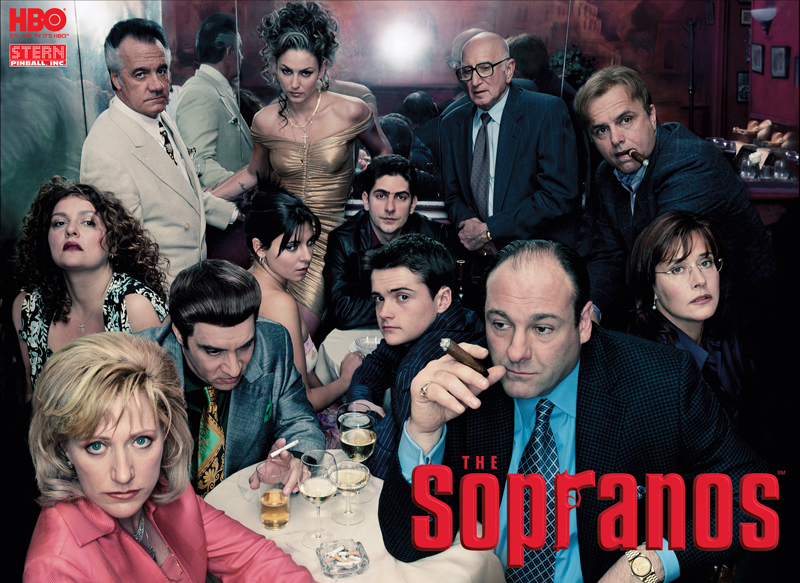
Take "The Sopranos," which is a much better example due to its unquestionable greatness (I think its conclusion, for the record, is brilliant. I won't argue about this). The first episode of "The Sopranos" was made famous for the "duck scene," which drew so much attention because it was the last thing anyone would expect in a program about gangsters, yet it was exactly what got "The Sopranos" noticed. It was that kind of creative "real world" perspective that made the show a hit. It was far, far from the graphic violence of "Scarface," yet "Scarface" is exactly what the fans were hoping for when the show came to an end. Instead, they got a nuanced, brilliantly staged, open-ended puzzle. The ending of "The Sopranos" is probably one of the best produced five minutes of television ever, and yet all most fans of the show said was that it sucked. It didn't; it was merely doing what HBO does best - provide a unique view on a not-so-unique idea.
I was thinking about HBO's fans' love/hate relationship with the channel's shows as Zac and I were watching the final 10 minutes of "Deadwood." I kept checking the timer on the DVD player, wondering when the big shoot out was going to happen. Zac and I had spent the final four episodes talking about how cool it was going to be to watch George Hearst (Gerald McRaney) finally get what he had coming to him. Well, surprise surprise. George Hearst (father of William Randolph Hearst) wasn't going to get what "he had coming to him." There was no big shoot-out, there was no big send-off. There was merely a realistic ending that proved the point Milch was always trying to make; that when society is built, the big dogs always end up on top. Nothing exciting, just a unique realism. It was the same realism that drew me into "Deadwood" in the first place.

Unfortunately, television viewers only want uniqueness at the beginning of their shows - they want their endings to be, well, a dead horse.

Saturday, July 28, 2007

"The Simpsons," Kalamazoo College, and Falling for the Past

(Ben's Note: Normally for "Movie Popcorn" posts I'll be blogging in a more traditional "movie review" mode, but since "The Simpson's Movie" has more personal significance for me, and because of the nature in which I saw it, I felt it more significant to discuss the film in the following terms).


The past can be a weird place to reside for a few days, especially when coincidence and nostalgia are invited in by outside sources. The past I'm talking about? The four years I spent living in Kalamazoo as a student at Kalamazoo College. The coincidental nostalgia? "The Simpson's Movie" arriving at theatres the same weekend my college roommate, Jared, and I traveled to Kalamazoo to re-live some of the good 'ole days.


On Thursday, Jared and I checked into Kalamazoo's new Comfort Inn, located at the base of Academy Street (where K-College begins), next door to our old favorite watering hole (which serves the best nachos in Michigan) the Up and Under, and directly on the spot where the scariest motel in Kalamazoo used to sit (the Downtowner, which had everything from hourly to weekly rates). Jared and I spent Thursday and Friday reliving moments which still seem recent even though more than half a decade has gone on down the road: playing Frisbee golf and dodging campus security, wandering through Tiffany's Wine and Spirits perusing wine we still can't afford, eating ribs at The Corner Bar, getting nachos at Rugger's, stopping by Munchie Mart and Jimmy John's late at night, experiencing pitcher night at Waldo's, eating the breakfast of champions at Nina's Cafe, and, perhaps most shockingly, watching "The Simpson's Movie" at the Kalamazoo 10 movie theatre.

Well, nostalgia can do some messed up things to a person. It can gloss over bad moments in the past (sophomore year comes quickly to mind), and turn a world of experience into the walking scene in "Reservoir Dogs"; pretty darn cool. So, what did my latest experience in Kalamazoo teach me? That Jared and I still suck at Frisbee golf, we still eat too much junk food, that Waldo's is no longer all that much fun without anyone we know there, and that the breakfast of champions at Nina's is now too big and almost 10 dollars. What else? Oh, yeah. "The Simpson's Movie" doesn't need artificial nostalgia to be important. The greatest television show of my college experience turned out to be the movie event of my summer. Go figure.

During my sophomore year of college in 2000-2001, Jared, our best friend Mohammed, and I watched (and taped) between 2-4 episodes of "The Simpson's" every weeknight. "The Simpson's" appeared on two different television stations four times between 5 and 8 pm. If the boys and I timed it right, we could tape two episodes before dinner at the cafeteria and one more afterwards. I still have those 6 VHS tapes of "Simpson's" episodes sitting in my den. It was the TV show we watched the most, quoted the most, and laughed with the most.

It was also the show we complained about the most. Even in 2001, we said the show had peaked years earlier. Everyone agreed that the best shows occured when Conan O'Brien was a writer, from 1991-1994 (the show was actually at its best from 1993 to 1996). Mohammed and I always said that "The Simpson's" before 1996 was a great television show, afterwards it was just a hilarious collection of jokes. It was the kind of discussion only college students have, and only college students care about. The complaints we had have all been heard before: that Homer had gotten too stupid, that the plots had gotten too random and strange, that they had run out of ideas, that Bart was marginalized. Yada yada yada, and it was all probably true. The show still exists as the last remaining original television program I cared about when I was 11-years-old (unbelievable, really), but it hasn't been important since I watched those re-runs everyday in 2001.

Well, "The Simpson's Movie" is important. And, more significantly, it is great.

That the movie would be funny and have a bunch of laughs was a given (even the television show still provides that in spades). That the movie would also be heartfelt and contain a plot that actually makes sense was the pleasant surprise, popping from the film like a lightning strike straight out of 1995. Here was a "Simpson's" that, as Mohammed would say, was a television show again, only as, strangely enough, a movie. I loved every moment of it, for all the best reasons: because it was playing at my all-time favorite theatre, because it reminded me of my college years, because it was great.

Jared and I might no longer be able to enjoy an evening at Waldo's the way we used to, but for one glorious afternoon we were able to enjoy an original "Simpson's" episode in the way, even in 2000, we thought we'd never experience again.

If Mohammed had been there, it would have been perfect. Forget nostalgia. Even in the land of the past, "The Simpson's Movie" arrived right on time.

Saturday, July 21, 2007

EduTech 2007 and Web 2.0


Well, my Michigan State graduate classes have finally concluded and while they've given me a lot to think about, this blog and what it symbolizes will be the most exciting and, for education, most important concept I'll take from it. What is that concept? Web 2.0.


I had heard the term Web 2.0 before classes began and I have been participating in Web 2.0 for years without putting the term and the idea together. In a nutshell, Web 2.0 is the changing from a static "www" experience to a interactive and community-based online experience. Examples of Web 2.0 abound everywhere: people posting comments on MSNBC.com after stories, user reviews on amazon.com and itunes, wikipedia and wikipages, and this blog are just a few examples.


While some forms of Web 2.0 have existed since the advent of the Internet itself (e-mail, anyone?), it's emergence as a high order concept that would dominate the web (the world?) became a theory and business model only after the dot.com bust at the turn of the millenia. When researchers, and more importantly, investors began to re-examine what online businesses survived the bust, they noticed that nearly all of them had some concept of Web 2.0 built into them (think user reviews with ebay and amazon, just to name a few). As a sign of just how powerful investors desires are, you can now find examples of this "new" Internet everywhere (look no further than your local newspaper's site; if they're good at what they do, they'll probably have a comments section; if they're bad, they probably won't).


The big question as an educator is how will this influence me in the classroom? There are a number of interesting ideas that, I must admit, both excite and scare me. For instance, the idea of having my kids write classroom essays using a wiki fascinates me. I sometimes assign "traveling" stories to my middle schoolers (a classroom activity where a student begins a story, then passes it on to another student who continues it and so on) and really think that a wiki assignment similar to a "traveling" story could produce a far better product. Additionally, the idea of having my students blog on various topics related to their study also intrigues me. I can think of great online discussion questions for high school readings that could be offered for extra credit (or real credit once it is fair to expect all students to have internet access). The very real possibility is that Web 2.0 might very well revolutionize how teachers' instruct.


What scares me? Well, namely, the idea of policing students who might feel the desire to get into a blog or wiki and ruin everything. Even in our Master's class of Education Technology one of my friends destroyed an entire wiki page. Of course, the administrator of that page, our professor, was able to quickly put it back up, but what if that happened on a Friday evening during the school year? Would I be responsible for checking the site every few hours? I have to admit that the idea of policing Web 2.0 feels very daunting. And an honest student mistake would be the least worrisome reality of incorporating this technology. The idea that a student might write something nasty about another student in a blog or wiki is a huge concern of mine. Yes, I would be able to figure out who did it, and yes, I would ensure they were appropriately punished, but I don't like the idea of placing myself in a disciplining mindset at 4 pm on a Saturday. I do like to think I have a life (even if I don't).


The bottom line is that while I probably won't inact much Web 2.0 in my classrooms on my own (meaning creating my own forums, wiki's and blogs) I will push hard for my district to begin using online course management systems that will allow me to use Web 2.0 in my classroom without feeling like I am putting myself out on a huge legal and ethical limb. Basically, I want my district on board with a plan of action and policies before I dive in completely. Hopefully, they'll do this sooner as opposed to later.


The greatest thing about the Educational possibilities of Web 2.0? That learning doesn't have to stop at the classroom door. The biggest concern as an educator? That working doesn't stop there, either.

Thursday, July 19, 2007

Pop Cultured: Harry Potter


I've never gotten the whole Harry Potter fuss. I was in high school when the first book was released and always felt that I just missed the "big deal" aspect. I saw the first two movies, although I'm not sure why; both films confirmed my earlier suspicion that I had missed the boat.

Well, now we're on the cusp of the big reveal. The pop culture question of the year (well, possibly next to "did Tony die?" and "Why can't Paris Hilton get justice?") and I couldn't be more excited. Why? I wish I could simply say that it's because I finally got excited about the storyline, finally read all the books, saw all the movies and joined all the "Harry Potter" blogs. But that's not it. No, I'm just pumped because it's a big deal and I like big deals. I also like the idea that I'll be able to find out on google Saturday morning what happened and then be able to hang that fact over my friends' heads while they frantically finish it over the weekend (while I'm at the beach).

Of course, my apathy regarding Mr. Potter doesn't mean I don't have a prediction for Harry's fate. Since I have almost no knowledge of the books' plots (it's about wizards, right?) I'll have to link to an old friend of mine from high school (okay, I used to watch a lot of "SportsCenter"), Mr. Keith Olbermann; his view is mine.

Not because I know Potter so well and agree; but because I love pop culture and want to feel like I know more than everyone else (even in this instance; when I know almost literally nothing).

It's about wizards, right?

Tuesday, July 17, 2007

Music Musings: "Easy Tiger" Review


Okay, it's been a few weeks since I last blogged and blabbed about my love of Ryan Adams and I've listened to "Easy Tiger" enough to get sick of it, fall back in love with it, then settle it into a typical musical rotation on my iPod. Time for a review.

Simply put: solid effort with modest staying power.

Of course, that's not too much fun to simply leave it at that, so let's take this on track-by-track.

Track 1: "Goodnight Rose."

A fairly rousing opening number that takes after Adams' Grateful Dead influenced (or ripped-off, depending on your prospective) songs from "Cold Roses." It has some solid, concise lyrical machinations "Get out of that dress/Get into bed/the bar is closed," that paint a pretty picture of a struggle for normalcy in a chaotic domestic life. Still, some clunky lines that don't age well ("And maybe we'll win the whole shebang" anyone? Didn't think so), and the repetitive chorus (a problem throughout the album) drag it into B-level Grateful Dead rip-offs. Worse, I never really liked the Grateful Dead in the first place. Let's just move on.

Track 2: "Two"

Two is the first and probably last single from the album. Early reports pegged it as a potential hit, but only because it had Sheryl Crow and the potential to relive that horrible Crow-Kid Rock duet from a few years back. Well, the song is definately not a hit, but it is pretty catchy. Also, sadly, harmless. There's nothing edgy about the song and the chorus is, yikes, mines a thousand hits ("It Takes Two." I mean, Springsteen was acused of ripping that off in 1980!). It reminds me of some of the (better) songs off of "Demolition," but it's not a particular stand-out. Worth mentioning that it's an outstanding vocal performance.

Track 3: "Everybody Knows."

A pretty solid love sick heartbroken song that Adams always does pretty well. It feels like it should be one of those songs you want to play a thousand times a day, but it unfortuntely finds a way to get lost in "Easy Tiger." The chorus' melody isn't particularly catchy (more of a rock-dirge), but its lyrics are inspired and creative ("You and I together/but only one of us in love/ and Everybody Knows"). It's the kind of lyric that hints to so much, yet leaves it hidden behind a wall of unique vagueness. Still, it doesn't quite have that "wow, I've never heard that before!" quality that most Adams' albums contain. It's kind of forgettable, but pretty damn catchy, too (that's not really meant to make sense).

Track 4: "Holloweenhead."

I was fully prepared to hate this song the moment I heard the title. How stupid. Worse, when the song started it sounded like so many of Adams' throw-away garage rockers that I usually hate ("Beautiful Sorta" being the perfect example). Well, this is the first song on the album that I instantly loved and continues to make me smile everytime I hear it. As far as I can tell it's a song about addiction, and the stupid things we sometimes do even when we know we shouldn't. But really, it's just a funny tune with a damn catchy melody and some great verses. I have a feeling I might get sick of this song soon, but certainly not yet. Might be worth noting that my wife (who loves most Ryan Adams' stuff, doesn't care much for this track. Go figure, she loves "Beautiful Sorta," so hey.

Track 5: "Oh My God, Whatever, Etc."

Oh My God, it's another solo guitar Ryan Adams downtrodden song. Whatever, etc. This is the type of song that lovers of "Heartbreaker" always wish he'd write more of, and the type of song he puts at least one of on each album, and the type of song I'm completely sick of listening to. It's not a bad track, just more of the same. Does have a great lyrics and some awesome vocals, but I feel like Adams could write five of these things a day (and he probably does).

Track 6: "Tears of Gold"

There's a decent chance that this song was written for "Jacksonville City Lights" and I certainly don't have a problem with that, except that it does feel more like an outtake than a deserving track. I have no problem with old twangy country, but it's not my favorite style, and the lyrics here don't provide a lot more worth paying attention to ("Where the one day we are strong/By the next day we are weak." Boring). Nothing wrong here, just nothing that I'd wait 3 minutes to IM my friend in 2001.

Track 7: "The Sun Also Sets."

Okay, now this is a lovely tune. It just grows and grows and grows on you. It's the kind of song that might have been on "Heartbreaker" that I would definately have enjoyed and still be listening to (like "Sweet Caroline" or even, dare I say it, "Come Pick Me Up.") The only problem? It's not quite in the same league with those other tunes. Why? The lyrics drag it down, badly. I worry Adams had nothing to say. ("I didn't know that people faded out/That people fade out so fast.") Hmm, not so excellent. Still, there's isn't all lyric disaster here. Heck, I'm knitpicking. Get this off of iTunes today. If you can't liked this track after 6 listens, you won't like typical Ryan Adams. At least check out his voice near the end of the track. Good stuff.

Track 8: "Off Broadway."

This song was written in 2001 for a bootleg called "The Suicide Handbook." A great song in bootleg version, okay in full production onslaught. I still can't get over Adams' (anti?) melodic alteration to the chorus, but it's still a great tune about, as Pitchfork said, "about being lost in your own town." Short, sweet, and sad. I'm glad he resurrected it.

Track 9: "Pearls on a String."

Now we're cooking! Three great songs in a row! My favorite Adams songs are the psuedo bluegrass numbers he writes every now and then. His voice is best experienced over a banjo picking, and he proves it again here with "Pearls on a String." It's not quite as good as my favorite in this genre ("Chin Up, Cheer Up." Don't even get me started talking about that song), but it's still pretty good. If you like the style, give it a whirl.

Track 10: "Rip Off."

Funny for Adams to use the biggest complaint about him as a song title. Doesn't help the fact that this song is pretty boring. There's some greats lines and a nice backing track, but the chorus is trash (repeating "At least I wasn't a rip-off" over and over again? Sorry, I'm not interested).

Track 11: "Two Hearts."

Nice song, great tune, good lyrics (although there's approximately 2,000 songs titled "Two Hearts" out there). Nothing spectacular; the kind of song that, if it was written by a popular musician 20 years ago would be a guaranteed top-10 hit. Kind of a forgettable song as far as Adams is concerned, but nothing to complain about.

Track 12: "These Girls"

Another unreleased tune from half a decade ago (kind of worrisome for someone usually so prolific, honestly) and another great one. Like "Oh My God, Whatever, etc." it copies the guitar-solo style from "Heartbreaker," but much more effectively here. I love this song, and the lyrics are dynamite. Good stuff.

Track 13: "I Taught Myself How to Grow Old."

This song sounds a lot like my two favorite Adams closing songs (both from the same album, incidentally, the double album "Cold Roses"). I spend a few weeks deciding on whether or not I liked it better or worse than "Friends" and "How Do You Keep Love Alive?" before realizing that I don't. Still, it's a good song and a lyric that reminds the audience that Ryan Adams is getting older and wiser.


So, where does the album rate as a whole? Pretty well, but also probably in the middle of the pack as far as the rest of the Ryan Adams catalog. Like all his albums, it feels like an "album," meaning that it has its own style and feel unique from all his other albums. Still, the songwriting isn't nearly as dynamic as past albums, and some of the lyrics are even more sloppy than usual. Here's my final ordering for all the Ryan Adams's albums, from best to worse.

Gold (2001)
Cold Roses (2005)
Pneumonia (Whiskeytown, 2001)
Demolition (2003)
Heartbreaker (every music critic's favorite, 2000)
Jacksonville City Nights (2005)
Easy Tiger (2007, remains right in the middle! How 'bout that!)
Stranger’s Almanac (Whiskeytown, 1997)
48 Hours (bootleg, 2002ish)
Love is Hell, Vol.1 and 2 (EP’s, 2003)
Rock N Roll (2003)
Faithless Street (1996)
29 (2005)

Friday, July 6, 2007

Music Musings: Ryan Adams and Me


Today was a big day. It marked the release of yet another Ryan Adam’s album, “Easy Tiger” his 13th (by my count) since 1996 (if you count his first band Whiskeytown, which released three albums between 96 and 2001). Adams is now closing in on his mid-thirties (shocking considering the man was famously said he would die by 30 by the talented-but kinda-geeky band The Old 97’s around the turn of the millennium) and still pumping out nearly an album a year.
While Adams is most often categorized by the press as being too prolific, his fans are marked as those who can be seen proclaiming in a quiet bar they wish he’d release all his music while simultaneously telling strangers they are talking about “RYAN Adams, not, of course, Bryan Adams.” While releasing nine albums (including a double album and no live albums) since 2000 could certainly be considered overly prolific, I always find it strange that reviewers can never decide what songs and albums should have been scrapped and which are the mark of a true genius. I found it humorous that when “Cold Roses” (arguably my favorite album ever, yet second favorite Ryan Adams album. Yep, he’s that good) was released, songs some critics hated, others loved. It seems that the only thing critics can agree on is that he writes too much. Marking what he should not have written seems a much more difficult task for them to agree on.
My introduction to Ryan Adams came in the summer of 2001, while I was sleeping. Earlier in the week I had purchased three separate albums, the last of those I digested was Whiskeytown’s 1997 release, “Stranger’s Almanac.” I had come home from a morning shift working at the golf course at the Grand Traverse Resort and had crashed on a hot day in my room after going for a run on the VASA trail. Before falling asleep I put “Almanac” on my CD player. I woke up to the lines “Eisenhower said in the war/He kept her picture in his pocket that was closest to his heart/And when he hit shore/It must have been a target for the gunmen.” As a sophomore English major, I was astonished at the depth and creativity of the lines; I was even more surprised when I found out Adams was barely twenty years old during the recording of the album.
On September 25th, 2001, two weeks after 9/11 and only a few days before I left for study abroad in England, Adam’s “Gold” was released and immediately blew my mind. Everything I did in England (good and bad) was done as a reflection of how I interpreted that album. It was a play-hard and work-hard attitude (the mixture of Adam’s prolific nature and party-too-much lifestyle). As a 21-year-old, it was the kind of lifestyle I longed to experience. Since then, Adams seems to have grown up with me, his albums reflecting each new turning point in my life (one of my biggest pop culture regrets is that I didn’t purchase his first album, “Heartbreaker,” when it was released my sophomore year in college – I could have used it to get through some hard times). In 2005, Adams released three albums (two excellent ones and one okay album) just as I was starting my career, getting married and buying a house. His music has been the soundtrack for my twenties.
So, today comes “Easy Tiger,” Adam’s latest album and, it seems, another great album. I’ll do a more pronounced review sometime next week (I’ve only listened to it twice so far), but I thought everyone would like to see where my Ryan Adam’s greatest albums ranking looks as of today (“Easy Tiger” may be moving up or down in the next few weeks – we’ll have to wait and see). Here goes:

Gold (2001)
Cold Roses (2005)
Pneumonia (Whiskeytown, 2001)
Demolition (2003)
Heartbreaker (every music critic's favorite, 2000)
Jacksonville City Nights (2005)
Easy Tiger (2007)
Stranger’s Almanac (Whiskeytown, 1997)
48 Hours (bootleg, 2002ish)
Love is Hell, Vol.1 and 2 (EP’s, 2003)
Rock N Roll (2003)
Faithless Street (1996)
29 (2005)

Go get them all and let me know what you think. And if you think "29" is bad because its last, its not. It's just Adams' worse, which is a whole heck of a lot of a lot better than Bryan Adams' best.
-BP