Wednesday, August 8, 2007

TC Film Festival: Six Films in Four Days

My wife, Liz, and I ended up seeing six films during the TC Film Festival. Perhaps the hardest part in attending the film festival is realizing there are probably over 20 really excellent films showing and only five days to see them all. If you're like me and your head begins to spin if you watch more than two movies a day, my recommendation is to keep the viewing at around six or seven total films. See one on Wednesday, two on Thursday, one on Friday and Saturday, and conclude with two on Sunday. That's more or less what Liz and I did, and it was just about right.

Below are reviews for the six films we ended up watching. Liz loves the french language, so we ended up seeing three french movies. My recommendation for someone new to the festival would be to see two foreign films, two American independent films, two documentaries, and one of the evening showings of a classic at the Open Space. That's what I'll do my best to do next year.

On to the reviews...

"The Valet" (PG-13)
"The Valet" is a light-hearted french comedy, effectively directed by Francis Veber, about a Paris valet, François (Gad Elmaleh) who is innocently caught in a paparazzi photo of billionaire Pierre (the famous french actor Daniel Auteuil) and his supermodel mistress, Elena (Alice Taglioni). To avoid a messy, and expensive, divorce, Pierre convinces his wife, Christine (a devious Kristin Scott Thomas) that François, not he, is dating the supermodel. The movie then presses forward as a screwball romantic comedy, with Pierre paying both the supermodel and François to live together in the hopees of convincing his wife they are a real couple. The film does a nice job of keeping the impact of François' friends finding out he is "dating" a supermodel from falling into cliche, and his preoccupation with his own love interest, Elena (Virginie Ledoyen), has some touching moments. Still, while the film is plenty entertaining, it spends too much time building cheap laughs to fully develop any of the characters. The comedic performances (other than the cheeky Dany Boon as Richard) are overacted and slap-stick, and the movie never completely sheds it's "sit-com" pilot feel. Enjoyable, but certainly not memorable.

An Oscar winner last year for Best Foreign Language film, this movie is nothing if not memorable. A historical film about the spying on playwrite Georg Dreyman (Sebastian Koch) by the Secret Police (Stasi) of East Germany during the waning days of communism, the film charts the impact serveilance has on a society. Although slow to get off the ground, the film truly takes off in its final reel, paving the way for one of the most heartbreaking moments of cinema in the last year and puncuated by the most sincere and emotional conclusions movies have to offer. Ulrich Mühe gives one of the best performances of the year as Hauptmann Gerd Wiesler, the idealistic and by-the-books Stasi officer whose sympathy for the subject of his spying leads him to risk his career to protect people he's never met. Both a scary reminder of a not-so-distant period of history and a commentary on today's post-9/11 world, "The Lives of Others," is a powerful look at the actions of kind men in the face of overwhelming, instittutional oppression. A much watch.

"Fireworks Wednesday" (similar to PG-13; officially NR)
"Fireworks Wednesday" is a snapshot of a day around a housing complex in Iran on the eve of the Persian New Year. The constant sound of firecrackers going off in the background give the film a discerniting feeling as the film-makers attempt to weave a story of several relationships in various states of evolution and devolution. I've forgotten most of the characters' names, but the movie contains a soon-to-be-married young cleaning woman sent to a high-rise apartment, where she witnesses a couple preparing for a holiday even as their marriage falls apart. The film does a nice job dealing with the subtilities of domestic challenges in an Iran few Americans even know exists, but it can help the fact that the film's pacing is flat and its many characters are hard to follow or care about. The script, by Asghar Farhadi and Mani Haghighi, highlights this film; the rest falls flat.

"My Best Friend" (PG-13)
Another french comedy starring Daniel Auteuil, this time as François Coste, a Paris art dealer with no friends. On a bet with his assistant, Catherine (the lovely Julie Gayet), he has 10 days to produce a best friend or he'll have to give her a Greek vase he purchased for over $200,000. François eventually enlists the help of his taxi driver, Bruno (Dany Boon, also in "The Valet") to help him make friends. The fact that they become "best friends" as the movie progresses is obvious, the twists the movie comes up with in getting there are not. Unfortunately, those twists break the first rule in comedy; it's okay for your main characters to be unrealistic, but the world they inhabit should be grounded in reality. "My Best Friend" loses that grounding in its final reel, but it doesn't stop it from being a heartfelt look at loneliness and friendship. There's a great movie hidden in this storyline; "My Best Friend" only takes us halfway there.

I'm usually not a big fan of vignette-based movies, and "Paris, Je T'Aime" is no different, even though I thoroughly enjoyed most, if not all, the vignettes. Especially memorable were the shorts about a dying woman and her husband, the lonely tourist (her French is horrific; her plight melancholic and memorable), and a story of a young man and his Muslim immigrant crush. The movie was directed by 18 of the most celebrated directors in the world (check out the official site for everyone's name; it's too long to mention here). Each short works in its own way, but like most collective movies, the individual parts are worth more than their sum. Some very moving moments, but the attempt at a collective, universal moment at the end of the film falls flat (it's too short and contains no real narrative strain). Worth watching, but nothing Oscar worthy.

"In the Shadow of the Moon" (documentary: NR)
"In the Shadow of the Moon" tells the story of the Apollo flight missings from 1969-1972; the story of man's trips to the moon, and, perhaps even more extraordinary, their returns. It can be easy in our world to overlook the fact that 9 brave and brilliant (white) men once walked on the moon(!), and this movie does an outstanding job of bringing that amazing fact back to the forefront of our thoughts. While the file footage and interview-led narrative with the original astronauts is impressive, I was most moved by the thought that once upon a time, the United States completed a political and cultural goal that inspired the entire world (instead of tearing it apart). Footage of a french woman in 1969 saying (I'm paraprhasing), "I always knew the Americans would do it; their such a wonderful people," will be enough to make even the hardest neo-conservative question what we've been doing internationally during the 21st-century.

Overall, I enjoyed the experience of all six films we watched. As I mentioned in the previous blog, the film festival is about more than "Just Great Films," although, more often than not, it has those, too, in spades.

In Praise of the Traverse City Film Festival

A few weeks before it began, my buddy Zac and I were talking about the Traverse City Film Festival. As a person who attended at least three screenings over the past three years, I was trying to articulate to Zac the"coolness" of the whole thing. As I was attempting to do so, Zac scrolled between Netflix and the film festival's website, saying "I usually check to see what movies are playing, then end up renting them," as if seeing great films was what the film festival is all about (to be fair, the festival's motto is "Just Great Films"). Well, seeing the movies doesn't even begin to explain the festival's appeal.

Yes, the Traverse City Film Festival shows good movies (and also some bad ones), but its appeal is much broader. Perhaps the only way I can explain its appeal to Zac without having him experience it for himself is by saying this: "The Traverse City Film Festival is the National Cherry Festival for Traverse City residents."

Anyone from Traverse City reading that statement knows the power of the sentiment.

Some background: The Traverse City Film Festival was founded in 2005 by filmmaker Michael Moore and co-founded by photographer John Robert Williams and writer Doug Stanton. Each year, the festival shows between 30-50 films at five downtown Traverse City locations: Lars Hockstead Auditorium, the Old Town Playhouse, the State Theatre, the Traverse City Opera House, and free evening outdoor screenings at the Open Space. The films range from classics (usually at the Open Space) to American independent films, documentaries, foreign films, and overlooked "classics" (can an old film that "bombed" be a "classic?"). Films show at 1, 4, 7, and 10 pm at all four indoor venues Wednesday through Sunday, with panel discussions, opening and closing night shows (this year was "Once" and "Moliere," respectively), and other special events scattered throughout the first week in August (this year, July 31-August 5). As far as the quality of films, that can obviously vary, but as a showing of the festival's previous success in picking winners, last year if a person in the Midwest wanted to see either "Little Miss Sunshine" or "Borat" months(!) before they broke nationally, the Traverse City Film Festival was the place to go.

(Ben's Note: Tomorrow's blog will feature short reviews of the six films my wife and I watched at the 2007 festival.)

But concentrating on the films would merely concede Zac's Netflix argument, which completely misses the point of the film festival. The simple fact is that Zac (and all my other friends from Traverse City who have since moved away) need to come see the film festival AS SOON AS POSSIBLE, because it is everything they would like to see from Traverse City in the summer without the crappiness that has become the Cherry Festival.

What do I mean by that? Well, if you have to stand in line for something during the Cherry Festival, you have to listen to some idiot talk about how awesome his "TC cherries" (they're actually probably from Washington state) are. If you have to stand in line for something during the Film Festival, chances are you're standing next to someone you know and haven't seen in years. You'll end up talking about what their kids are doing, and the new pizza place (Pangea's; it's very good). During the Cherry Festival, a person will have to wait two hours for a table at North Peak; during the Film Festival, five minutes. The point is that while Traverse City is way too busy, and full of "fudgies," during the Cherry Festival, it is only moderately busy, and full of locals, during the Film Festival. As Frank Costanza would have said in 1995, "It's a festivus for the rest of us!"

What makes the local flavor of the film festival so great is that the festival itself is so well put together, and, well, (to us the words of the previously mocked "fudgy") awesome. From the local bands playing before the showings, to the funny public service announcements that are filmed right in good 'ole TC, the MC's revving up the crowd, the programs, the sectioned-off seating for the jury, the recognition the local sponsors get from the audience, and the panel discussions with Hollywood big-wigs (and how those big-wigs then show little patience with our local, idiot reporters). Going to even one showing of the Traverse City Film Festival is making the realization that: wow, this is a BIG deal, and it's really cool.

Side Story: Not everyone realized how big this was going to be when it first opened in 2005. In protest of the inaugural film festival, a few local conservatives tried to produce a competing festival during the same week (the idea that the TC film festival might be liberal propaganda is so ridiculous it's not worth mentioning). They showed some "alternative" documentaries at different locations, culminating in a showing of "Michael Moore Hates America" that was so poorly planned the "children friendly" festival got an un-edited cut of the film that included graphic language, an oversight that begs for so many jokes I'm just going to leave it alone. What the protesters didn't realize with their "film festival" in 2005 is that they were competing against the "Real Deal," and there is no way to compete against that. My analogy at the time was it was like a person who hated Starbucks getting back at the mega-corporation by selling "real" coffee from a stand in their front yard. It's not really a protest, just pathetic.

And, of course, this gets us to the urgency for my friends to visit the Traverse City Film Festival now. Because, like the Cherry Festival used to be, all good ideas eventually become too big and too good to be left alone to their local populations. The Traverse City Film Festival can really only go in two directions: it can get really huge (like Sundance) and lose all its local charm (although it would be cool to see our local paper try to interview George Clooney and Steven Spielberg), or it can slowly die. It's a dilemma as old as time, and one that the Cherry Festival fought for a long time before finally becoming the behemoth it is today.

So, Zac, come see the Traverse City Film Festival before it gets too big. It's the local event you've been waiting for since carnival rides started making you sick.

Sunday, August 5, 2007

Our 44th President: Hilary Clinton

I'm calling it now so I can be the first people to say "I told you so," in November of 2008. Hillary Clinton will be our next President. I'm 100% sure. Okay, I'm about 75% sure; which is certainly confident enough to put my reasoning down for the whole world to see (hi, mom).
Before I get to my list, I thought I'd first share some thoughts on political junkies, myself included. Political junkies are generally smart people who care deeply about elections, idealism, and love talking about thinks like "electability" and "the issues." The problem with political junkies is they know more about politics than anyone else, care more about politics than anyone else, and therefore over think everything about politics. They are also the only people writing and talking about politics right now (meaning 12 months before anyone else will really start caring). As a political junkie myself, I have no problem with these things, but the problem with all this close scrutiny on (take a deep breath) Hardball, Meet the Press, Face the Nation, The O'Reilly Factor, Face the Nation, NOW, Inside Washington, The Situation Room, This Week, Think Tank, Crossfire, and the ten thousand other political shows (along with the 15 people currently tuning in) is that they are debating "electability" issues that ultimately mean nothing.

Why nothing? Because they are forgetting just how simple elections really are, and they're forgetting that of the politicians running right now, there is only one surefire winner: Hilary Clinton.

I made this realization a few weeks ago while having dinner with my friend Amanda and some of her "political junkie" friends. They all work for Michigan's democratic party and, of course, have a thousand ideas on who is going to win the 2008 election. When I gave them my prediction for another round of Clinton, they all looked at me like I was a freak and an idiot. It was at that precise moment I realized I was right, not because Amanda and her friends are idiots, but because they are too smart. These are the people who wish Al Gore would run again, loved Mr. Scream himself, Howard Dean, and probably would have volunteered for George McGovern in 1972 (if they were alive at the time). The bottom line is that they are so caught up in their own political idealism they (and all the televised hacks as well) have forgotten these very simple realities that are irrefutable proof that Hilary will win:

1. Democrats are Destined to Win in 2008. Have you seen President Bush's poll numbers? I mean, they stink. What kind of bounce will he give the party at the Republican National Convention? Heck, he'll be lucky if they even invite him. The bottom line is that with Iraq, the budget, the special prosecutors, and all the other problems the party has had over the last few years, there is little to no chance a "normal" Republican will win the general election. Unless a Democrat boggles something horribly (or Jesus flies down on Ronald Reagan's back and wipes out the Taliban and Al Qaeda on American Idol), a Democrat will be our next President.

2. Everyone Else Running has Massive Flaws. Barack Obama has almost no experience, not to mention his middle name is Hussein (forget being African American! Try sharing that in common with Saddam!); McCain is a thousand years old, has no money, and is hated by everyone but the press corp and fiscal conservatives; John Edwards is a light weight; Giuliani could win if he was a Democrat, and didn't have two ex-wives and children who hate him; Romney is trying for the arch-conservative vote as a Mormon; Fred Thompson would be intriguing if he had any experience (or didn't have the same appeal that Bush originally had - I highly doubt anyone wants to elect another Bush right now). It's a disaster. Forget the fact that none of the Republicans I just mentioned have a chance. There's nobody on this list who will survive the intense scrutiny of a Presidential run. Now, its true that Hilary also has her flaws, but read ahead to see how those won't mean diddly squat.

3. Being a Woman is Better (Politically) Than Being Black or Hispanic. There are over 150 million women in the United States. There are somewhere between 15-25 million Hispanics and less than 25 million African-Americans. As far as counting on "minority" votes to sweep a "minority" into office, I'd count on the person who is requiring those quotation marks around the word "minority." Women are a minority only in the sense that they have been persecuted for their sex; in numbers, they are the ultimate majority. If even some women who would normally not vote (or vote Republican) vote for Hilary because she is a woman, it will be a huge voting windfall. Barack Obama and Bill Richardson counting on the minorities (no quotation marks there) in their corner to help them out in a similar way is, frankly, mathematical wishful thinking.

4. The Clintons Always Win. Some candidates could easily screw up the "woman vote" factor. Not the Clintons. If there is anything for them to exploit, they will. Remember, the Clintons (and their merry team of strategists) have already won every type of election possible: Bill came out of nowhere in 1992, won with a big lead and never seriously screwed up in 1996, and Hilary ran two smart and serious campaigns for the Senate. They will exploit every hole in every other campaign, and it will be very difficult to fight back against Hilary Clinton because...

4. Smearing a Women will be Politically Disastrous. It's already started, and already gotten the 10 women who are concentrating on politics to go absolutely nuts. When (it's not a matter of "if"), the Republican candidate starts in with a patriarchal tone towards Senator Clinton, it will be the absolute END for that candidate. Mark my words. The Clintons will exploit whatever slip-up happens (during a debate? an ad campaign?) and run so wild with it that they just might end up getting 80 percent of the female vote (and get a huge female turnout while doing so). There is going to be an underground campaign in this election, and it is going to involve exploiting patriarchal sexism to turn out massive amounts of unhappy housewives, lesbian revolutionaries, and grandmothers who are sick of being told to make dinner every night. Just wait.

5. Popularity-Wise, Hilary has Nowhere to Go but Up. I've just mentioned a few of the other candidates larger flaws, but I don't really need to tell you Hilary's. That's because everyone already knows EVERY SINGLE flaw she has. The political junkies out there are playing this up like its a major problem (when they bring up her "like ability" numbers). I have a feeling that the Clintons are laughing heartily at this. Why? Because while every other candidate can (and will) be dragged through the mud, Hilary already has. Getting new dirt on her will be like trying to squeeze water from a turnip. The Republicans will try, but people are still sick of hearing about Whitewater, Health Care Reform, and Monica Gate. We already know it all. When we find out that Fred Thompson likes to date Asian lobbyists, or Giuliani fired his maid for speaking Spanish, or whatever is out there, Hilary is going to sit back and relax. Because she's been under the spotlight forever.

As a political junkie myself, its easy for me to criticize the logic I've laid forward. It's true what they say: "Anything can happen." I'm sure there are a lot of candidates with pretty good chances at winning, and Al Gore entering the race in late October could make this the most ridiculous blog ever (I still doubt it, thought), but the reality is that a) a Democrat is going to be the next President, b) Clinton has the best political minds working for her and c) she's going to be very, VERY hard to effectively attack.

So, forget Hardball and Meet the Press; all you need is one political junkie to tell you what's going to happen: ME. And I'm calling it today.

First Gentleman Bill Clinton is returning to the white house. Unlike the upcoming election, the effects of that will be difficult to predict.

Monday, July 30, 2007

Why We Love/Hate HBO Programs

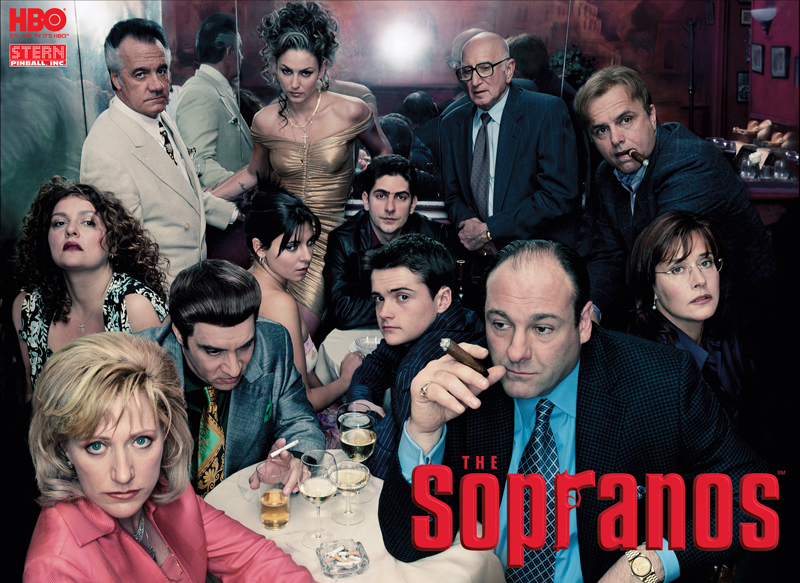
My experience with HBO is pretty limited. As a senior in college my roommates and I decided it would be worth an extra eight dollars a month for the four HBO channels, mainly because we wanted to watch (big surprise) "The Sopranos," although the access to potentially limitless movies, at the time, seemed a plus.

Well, four years later and I haven't exactly missed HBO, although to be fair, access to DVD's of entire seasons of programs is a big reason why I'm not exactly heartbroken. DVD access to great shows like "The Sopranos" and "Deadwood" (the only two HBO dramas I'm qualified to talk about) provides anyone with Netflix the opportunity to allow HBO's true strength to overshadow its weakest link (thirty showings a week of "Norbit," for instance).

The purpose behind today's blog is to examine what I think is the most interesting issue regarding how the public views HBO's original programming. To do so I'll be looking at both "The Sopranos" and "Deadwood," two critically acclaimed dramas which both ended their runs in the last two years. Both shows were beloved by their fans and critics alike, and both shows ended in unexpected and, for most fans, disappointing ways. Not surprisingly (at least to me), it seems that the reason so many people came to love these shows is the same reason they ended up hating their conclusions. Let me explain.

First of all, it would be idiotic of me to go on in length to review and/or proselytize on the conclusion to "The Sopranos." Everyone in the history of blogging already has a theory and I'd only be the last in line to put in my two cents. I've linked to it before in this space, but I don't think I could say it better than Bob Harris already has (especially since I have actually not seen the entire episode). The bottom line: Sorry, but Tony Dies.

I would, however, like to spend a few minutes walking my way to the conclusion of "Deadwood," the HBO series that ended, after three seasons, in 2006. I watched all three seasons on DVD this summer, and finished the concluding series with my friend Zac three weeks ago. The show takes place during the early history of Deadwood, North Dakota, a gold-rush town that sprung up after the Civil War in American Indian territory and enjoyed modest prosperity until several fires and the end of the rush turned it mostly into a ghost town. The series' creator David Milch, choose Deadwood's early history because he wanted to examine how societies spring up from nothingness. Deadwood was a good vehicle for this (perhaps even better than Rome, which was used in another HBO series), as the town began as a settlement outside of the United States' jurisdiction before quickly getting gobbled up by the government as the nation's leaders saw it making money and holding a potential for vast profits from the gold trade.

The show centers around the exploits of a huge ensemble cast, led by Al Swearengen (Ian McShane) as the pimp/landlord/realtor/thief/murderer everyone loves to hate (then eventually, and strangely, hates to love), Seth Bullock (Timothy Olyphant), an ex-lawman from Montana who soon realizes that the absence of law doesn't necessary eliminate the need for lawmen and moral arbiters, and Alma Garret (Molly Parker), an East-coast wife whose intelligence and street smarts slowly reveals itself after the dubious death of her idiot husband. Each of these characters is surrounded by dozens of significant supporting players, villains, and external issues that dominated life in the "real" Wild West. In a quick synopsis, season one examines life in a lawless community; season two examines how law develops in a lawless vacuum, and season three examines how even the cool and the well-meaning will eventually get run roughshod over by the Fat Cats (either of consumerism or politics; often both).

"Deadwood" is an easy show for a guy like me to like. It's a Western, for one. It's got violence, yes, but more importantly, it's got tough guys talking tough, which has always been the true essence of a great Western. What the critics loved, at least at first, about "Deadwood" was that it took a topic that has been done to death, the Western, and re-invented in a way that seemed both different and much more realistic. That quality has become the hallmark of nearly all HBO shows; take a dead horse and make it look like a zebra with horns.

"Deadwood" jumped out of the gate with all the best "zebra" qualities; it was dirtier, nastier, meaner, and more profane than anything John Wayne would have been a party to. The first episode began with a crazy conversation and the most bizarre form of law enforcement ever put to film. Check out the clip (warning: there's some serious swearing in "Deadwood"):


Still, "Deadwood" has its problems as well. Although it tried very hard to have that creative "Sopranos" quality, it was far more inconsistent. While everything looked cool, not everything had two, or even three, symbolic meanings like "The Sopranos" often pulled off. Sometimes it felt like "Deadwood" was just trying to be cool for coolness sake (the proverbial "trying too hard" problem). Additionally, while the show often strove to be unique, sometimes it came off as phony. There is no better example than its use of graphic language (which even got a rebuke from HBO). While I certainly don't doubt that men living in a hard world made up predominately of hard men used extremely strong language, I doubt that their strong language sounded like your average 21st-century factory worker (this has been addressed by other sources). I'm probably just nitpicking, but at times the show seems more unique than authentic. Its not a huge problem (heck, I'd take unique eight days out of seven), but it does probably make it a second-tier HBO show.

Which brings us back to the issue at hand - why people love HBO shows but always hate how they conclude. It is in this feature that both "The Sopranos" and "Deadwood" share a somewhat similar complaint. Basically, that neither shows ended with the action-packed definitively jaw-dropping conclusion their fans desired.
I find it a funny complaint, because the things that made both shows so memorable in the first place (their uniqueness, their strange take on familiar topics - gangsters and Westerns, their bizarre plot twists), is exactly, in the end, the reason why people ended up so upset with their conclusions.

Take "The Sopranos," which is a much better example due to its unquestionable greatness (I think its conclusion, for the record, is brilliant. I won't argue about this). The first episode of "The Sopranos" was made famous for the "duck scene," which drew so much attention because it was the last thing anyone would expect in a program about gangsters, yet it was exactly what got "The Sopranos" noticed. It was that kind of creative "real world" perspective that made the show a hit. It was far, far from the graphic violence of "Scarface," yet "Scarface" is exactly what the fans were hoping for when the show came to an end. Instead, they got a nuanced, brilliantly staged, open-ended puzzle. The ending of "The Sopranos" is probably one of the best produced five minutes of television ever, and yet all most fans of the show said was that it sucked. It didn't; it was merely doing what HBO does best - provide a unique view on a not-so-unique idea.
I was thinking about HBO's fans' love/hate relationship with the channel's shows as Zac and I were watching the final 10 minutes of "Deadwood." I kept checking the timer on the DVD player, wondering when the big shoot out was going to happen. Zac and I had spent the final four episodes talking about how cool it was going to be to watch George Hearst (Gerald McRaney) finally get what he had coming to him. Well, surprise surprise. George Hearst (father of William Randolph Hearst) wasn't going to get what "he had coming to him." There was no big shoot-out, there was no big send-off. There was merely a realistic ending that proved the point Milch was always trying to make; that when society is built, the big dogs always end up on top. Nothing exciting, just a unique realism. It was the same realism that drew me into "Deadwood" in the first place.

Unfortunately, television viewers only want uniqueness at the beginning of their shows - they want their endings to be, well, a dead horse.

Saturday, July 28, 2007

"The Simpsons," Kalamazoo College, and Falling for the Past

(Ben's Note: Normally for "Movie Popcorn" posts I'll be blogging in a more traditional "movie review" mode, but since "The Simpson's Movie" has more personal significance for me, and because of the nature in which I saw it, I felt it more significant to discuss the film in the following terms).


The past can be a weird place to reside for a few days, especially when coincidence and nostalgia are invited in by outside sources. The past I'm talking about? The four years I spent living in Kalamazoo as a student at Kalamazoo College. The coincidental nostalgia? "The Simpson's Movie" arriving at theatres the same weekend my college roommate, Jared, and I traveled to Kalamazoo to re-live some of the good 'ole days.


On Thursday, Jared and I checked into Kalamazoo's new Comfort Inn, located at the base of Academy Street (where K-College begins), next door to our old favorite watering hole (which serves the best nachos in Michigan) the Up and Under, and directly on the spot where the scariest motel in Kalamazoo used to sit (the Downtowner, which had everything from hourly to weekly rates). Jared and I spent Thursday and Friday reliving moments which still seem recent even though more than half a decade has gone on down the road: playing Frisbee golf and dodging campus security, wandering through Tiffany's Wine and Spirits perusing wine we still can't afford, eating ribs at The Corner Bar, getting nachos at Rugger's, stopping by Munchie Mart and Jimmy John's late at night, experiencing pitcher night at Waldo's, eating the breakfast of champions at Nina's Cafe, and, perhaps most shockingly, watching "The Simpson's Movie" at the Kalamazoo 10 movie theatre.

Well, nostalgia can do some messed up things to a person. It can gloss over bad moments in the past (sophomore year comes quickly to mind), and turn a world of experience into the walking scene in "Reservoir Dogs"; pretty darn cool. So, what did my latest experience in Kalamazoo teach me? That Jared and I still suck at Frisbee golf, we still eat too much junk food, that Waldo's is no longer all that much fun without anyone we know there, and that the breakfast of champions at Nina's is now too big and almost 10 dollars. What else? Oh, yeah. "The Simpson's Movie" doesn't need artificial nostalgia to be important. The greatest television show of my college experience turned out to be the movie event of my summer. Go figure.

During my sophomore year of college in 2000-2001, Jared, our best friend Mohammed, and I watched (and taped) between 2-4 episodes of "The Simpson's" every weeknight. "The Simpson's" appeared on two different television stations four times between 5 and 8 pm. If the boys and I timed it right, we could tape two episodes before dinner at the cafeteria and one more afterwards. I still have those 6 VHS tapes of "Simpson's" episodes sitting in my den. It was the TV show we watched the most, quoted the most, and laughed with the most.

It was also the show we complained about the most. Even in 2001, we said the show had peaked years earlier. Everyone agreed that the best shows occured when Conan O'Brien was a writer, from 1991-1994 (the show was actually at its best from 1993 to 1996). Mohammed and I always said that "The Simpson's" before 1996 was a great television show, afterwards it was just a hilarious collection of jokes. It was the kind of discussion only college students have, and only college students care about. The complaints we had have all been heard before: that Homer had gotten too stupid, that the plots had gotten too random and strange, that they had run out of ideas, that Bart was marginalized. Yada yada yada, and it was all probably true. The show still exists as the last remaining original television program I cared about when I was 11-years-old (unbelievable, really), but it hasn't been important since I watched those re-runs everyday in 2001.

Well, "The Simpson's Movie" is important. And, more significantly, it is great.

That the movie would be funny and have a bunch of laughs was a given (even the television show still provides that in spades). That the movie would also be heartfelt and contain a plot that actually makes sense was the pleasant surprise, popping from the film like a lightning strike straight out of 1995. Here was a "Simpson's" that, as Mohammed would say, was a television show again, only as, strangely enough, a movie. I loved every moment of it, for all the best reasons: because it was playing at my all-time favorite theatre, because it reminded me of my college years, because it was great.

Jared and I might no longer be able to enjoy an evening at Waldo's the way we used to, but for one glorious afternoon we were able to enjoy an original "Simpson's" episode in the way, even in 2000, we thought we'd never experience again.

If Mohammed had been there, it would have been perfect. Forget nostalgia. Even in the land of the past, "The Simpson's Movie" arrived right on time.

Saturday, July 21, 2007

EduTech 2007 and Web 2.0


Well, my Michigan State graduate classes have finally concluded and while they've given me a lot to think about, this blog and what it symbolizes will be the most exciting and, for education, most important concept I'll take from it. What is that concept? Web 2.0.


I had heard the term Web 2.0 before classes began and I have been participating in Web 2.0 for years without putting the term and the idea together. In a nutshell, Web 2.0 is the changing from a static "www" experience to a interactive and community-based online experience. Examples of Web 2.0 abound everywhere: people posting comments on MSNBC.com after stories, user reviews on amazon.com and itunes, wikipedia and wikipages, and this blog are just a few examples.


While some forms of Web 2.0 have existed since the advent of the Internet itself (e-mail, anyone?), it's emergence as a high order concept that would dominate the web (the world?) became a theory and business model only after the dot.com bust at the turn of the millenia. When researchers, and more importantly, investors began to re-examine what online businesses survived the bust, they noticed that nearly all of them had some concept of Web 2.0 built into them (think user reviews with ebay and amazon, just to name a few). As a sign of just how powerful investors desires are, you can now find examples of this "new" Internet everywhere (look no further than your local newspaper's site; if they're good at what they do, they'll probably have a comments section; if they're bad, they probably won't).


The big question as an educator is how will this influence me in the classroom? There are a number of interesting ideas that, I must admit, both excite and scare me. For instance, the idea of having my kids write classroom essays using a wiki fascinates me. I sometimes assign "traveling" stories to my middle schoolers (a classroom activity where a student begins a story, then passes it on to another student who continues it and so on) and really think that a wiki assignment similar to a "traveling" story could produce a far better product. Additionally, the idea of having my students blog on various topics related to their study also intrigues me. I can think of great online discussion questions for high school readings that could be offered for extra credit (or real credit once it is fair to expect all students to have internet access). The very real possibility is that Web 2.0 might very well revolutionize how teachers' instruct.


What scares me? Well, namely, the idea of policing students who might feel the desire to get into a blog or wiki and ruin everything. Even in our Master's class of Education Technology one of my friends destroyed an entire wiki page. Of course, the administrator of that page, our professor, was able to quickly put it back up, but what if that happened on a Friday evening during the school year? Would I be responsible for checking the site every few hours? I have to admit that the idea of policing Web 2.0 feels very daunting. And an honest student mistake would be the least worrisome reality of incorporating this technology. The idea that a student might write something nasty about another student in a blog or wiki is a huge concern of mine. Yes, I would be able to figure out who did it, and yes, I would ensure they were appropriately punished, but I don't like the idea of placing myself in a disciplining mindset at 4 pm on a Saturday. I do like to think I have a life (even if I don't).


The bottom line is that while I probably won't inact much Web 2.0 in my classrooms on my own (meaning creating my own forums, wiki's and blogs) I will push hard for my district to begin using online course management systems that will allow me to use Web 2.0 in my classroom without feeling like I am putting myself out on a huge legal and ethical limb. Basically, I want my district on board with a plan of action and policies before I dive in completely. Hopefully, they'll do this sooner as opposed to later.


The greatest thing about the Educational possibilities of Web 2.0? That learning doesn't have to stop at the classroom door. The biggest concern as an educator? That working doesn't stop there, either.

Thursday, July 19, 2007

Pop Cultured: Harry Potter


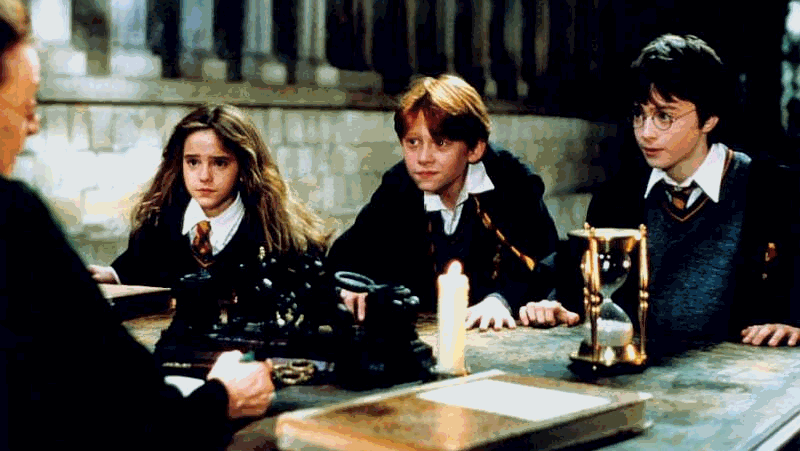
I've never gotten the whole Harry Potter fuss. I was in high school when the first book was released and always felt that I just missed the "big deal" aspect. I saw the first two movies, although I'm not sure why; both films confirmed my earlier suspicion that I had missed the boat.

Well, now we're on the cusp of the big reveal. The pop culture question of the year (well, possibly next to "did Tony die?" and "Why can't Paris Hilton get justice?") and I couldn't be more excited. Why? I wish I could simply say that it's because I finally got excited about the storyline, finally read all the books, saw all the movies and joined all the "Harry Potter" blogs. But that's not it. No, I'm just pumped because it's a big deal and I like big deals. I also like the idea that I'll be able to find out on google Saturday morning what happened and then be able to hang that fact over my friends' heads while they frantically finish it over the weekend (while I'm at the beach).

Of course, my apathy regarding Mr. Potter doesn't mean I don't have a prediction for Harry's fate. Since I have almost no knowledge of the books' plots (it's about wizards, right?) I'll have to link to an old friend of mine from high school (okay, I used to watch a lot of "SportsCenter"), Mr. Keith Olbermann; his view is mine.

Not because I know Potter so well and agree; but because I love pop culture and want to feel like I know more than everyone else (even in this instance; when I know almost literally nothing).

It's about wizards, right?

Tuesday, July 17, 2007

Music Musings: "Easy Tiger" Review


Okay, it's been a few weeks since I last blogged and blabbed about my love of Ryan Adams and I've listened to "Easy Tiger" enough to get sick of it, fall back in love with it, then settle it into a typical musical rotation on my iPod. Time for a review.

Simply put: solid effort with modest staying power.

Of course, that's not too much fun to simply leave it at that, so let's take this on track-by-track.

Track 1: "Goodnight Rose."

A fairly rousing opening number that takes after Adams' Grateful Dead influenced (or ripped-off, depending on your prospective) songs from "Cold Roses." It has some solid, concise lyrical machinations "Get out of that dress/Get into bed/the bar is closed," that paint a pretty picture of a struggle for normalcy in a chaotic domestic life. Still, some clunky lines that don't age well ("And maybe we'll win the whole shebang" anyone? Didn't think so), and the repetitive chorus (a problem throughout the album) drag it into B-level Grateful Dead rip-offs. Worse, I never really liked the Grateful Dead in the first place. Let's just move on.

Track 2: "Two"

Two is the first and probably last single from the album. Early reports pegged it as a potential hit, but only because it had Sheryl Crow and the potential to relive that horrible Crow-Kid Rock duet from a few years back. Well, the song is definately not a hit, but it is pretty catchy. Also, sadly, harmless. There's nothing edgy about the song and the chorus is, yikes, mines a thousand hits ("It Takes Two." I mean, Springsteen was acused of ripping that off in 1980!). It reminds me of some of the (better) songs off of "Demolition," but it's not a particular stand-out. Worth mentioning that it's an outstanding vocal performance.

Track 3: "Everybody Knows."

A pretty solid love sick heartbroken song that Adams always does pretty well. It feels like it should be one of those songs you want to play a thousand times a day, but it unfortuntely finds a way to get lost in "Easy Tiger." The chorus' melody isn't particularly catchy (more of a rock-dirge), but its lyrics are inspired and creative ("You and I together/but only one of us in love/ and Everybody Knows"). It's the kind of lyric that hints to so much, yet leaves it hidden behind a wall of unique vagueness. Still, it doesn't quite have that "wow, I've never heard that before!" quality that most Adams' albums contain. It's kind of forgettable, but pretty damn catchy, too (that's not really meant to make sense).

Track 4: "Holloweenhead."

I was fully prepared to hate this song the moment I heard the title. How stupid. Worse, when the song started it sounded like so many of Adams' throw-away garage rockers that I usually hate ("Beautiful Sorta" being the perfect example). Well, this is the first song on the album that I instantly loved and continues to make me smile everytime I hear it. As far as I can tell it's a song about addiction, and the stupid things we sometimes do even when we know we shouldn't. But really, it's just a funny tune with a damn catchy melody and some great verses. I have a feeling I might get sick of this song soon, but certainly not yet. Might be worth noting that my wife (who loves most Ryan Adams' stuff, doesn't care much for this track. Go figure, she loves "Beautiful Sorta," so hey.

Track 5: "Oh My God, Whatever, Etc."

Oh My God, it's another solo guitar Ryan Adams downtrodden song. Whatever, etc. This is the type of song that lovers of "Heartbreaker" always wish he'd write more of, and the type of song he puts at least one of on each album, and the type of song I'm completely sick of listening to. It's not a bad track, just more of the same. Does have a great lyrics and some awesome vocals, but I feel like Adams could write five of these things a day (and he probably does).

Track 6: "Tears of Gold"

There's a decent chance that this song was written for "Jacksonville City Lights" and I certainly don't have a problem with that, except that it does feel more like an outtake than a deserving track. I have no problem with old twangy country, but it's not my favorite style, and the lyrics here don't provide a lot more worth paying attention to ("Where the one day we are strong/By the next day we are weak." Boring). Nothing wrong here, just nothing that I'd wait 3 minutes to IM my friend in 2001.

Track 7: "The Sun Also Sets."

Okay, now this is a lovely tune. It just grows and grows and grows on you. It's the kind of song that might have been on "Heartbreaker" that I would definately have enjoyed and still be listening to (like "Sweet Caroline" or even, dare I say it, "Come Pick Me Up.") The only problem? It's not quite in the same league with those other tunes. Why? The lyrics drag it down, badly. I worry Adams had nothing to say. ("I didn't know that people faded out/That people fade out so fast.") Hmm, not so excellent. Still, there's isn't all lyric disaster here. Heck, I'm knitpicking. Get this off of iTunes today. If you can't liked this track after 6 listens, you won't like typical Ryan Adams. At least check out his voice near the end of the track. Good stuff.

Track 8: "Off Broadway."

This song was written in 2001 for a bootleg called "The Suicide Handbook." A great song in bootleg version, okay in full production onslaught. I still can't get over Adams' (anti?) melodic alteration to the chorus, but it's still a great tune about, as Pitchfork said, "about being lost in your own town." Short, sweet, and sad. I'm glad he resurrected it.

Track 9: "Pearls on a String."

Now we're cooking! Three great songs in a row! My favorite Adams songs are the psuedo bluegrass numbers he writes every now and then. His voice is best experienced over a banjo picking, and he proves it again here with "Pearls on a String." It's not quite as good as my favorite in this genre ("Chin Up, Cheer Up." Don't even get me started talking about that song), but it's still pretty good. If you like the style, give it a whirl.

Track 10: "Rip Off."

Funny for Adams to use the biggest complaint about him as a song title. Doesn't help the fact that this song is pretty boring. There's some greats lines and a nice backing track, but the chorus is trash (repeating "At least I wasn't a rip-off" over and over again? Sorry, I'm not interested).

Track 11: "Two Hearts."

Nice song, great tune, good lyrics (although there's approximately 2,000 songs titled "Two Hearts" out there). Nothing spectacular; the kind of song that, if it was written by a popular musician 20 years ago would be a guaranteed top-10 hit. Kind of a forgettable song as far as Adams is concerned, but nothing to complain about.

Track 12: "These Girls"

Another unreleased tune from half a decade ago (kind of worrisome for someone usually so prolific, honestly) and another great one. Like "Oh My God, Whatever, etc." it copies the guitar-solo style from "Heartbreaker," but much more effectively here. I love this song, and the lyrics are dynamite. Good stuff.

Track 13: "I Taught Myself How to Grow Old."

This song sounds a lot like my two favorite Adams closing songs (both from the same album, incidentally, the double album "Cold Roses"). I spend a few weeks deciding on whether or not I liked it better or worse than "Friends" and "How Do You Keep Love Alive?" before realizing that I don't. Still, it's a good song and a lyric that reminds the audience that Ryan Adams is getting older and wiser.


So, where does the album rate as a whole? Pretty well, but also probably in the middle of the pack as far as the rest of the Ryan Adams catalog. Like all his albums, it feels like an "album," meaning that it has its own style and feel unique from all his other albums. Still, the songwriting isn't nearly as dynamic as past albums, and some of the lyrics are even more sloppy than usual. Here's my final ordering for all the Ryan Adams's albums, from best to worse.

Gold (2001)
Cold Roses (2005)
Pneumonia (Whiskeytown, 2001)
Demolition (2003)
Heartbreaker (every music critic's favorite, 2000)
Jacksonville City Nights (2005)
Easy Tiger (2007, remains right in the middle! How 'bout that!)
Stranger’s Almanac (Whiskeytown, 1997)
48 Hours (bootleg, 2002ish)
Love is Hell, Vol.1 and 2 (EP’s, 2003)
Rock N Roll (2003)
Faithless Street (1996)
29 (2005)

Friday, July 6, 2007

Music Musings: Ryan Adams and Me


Today was a big day. It marked the release of yet another Ryan Adam’s album, “Easy Tiger” his 13th (by my count) since 1996 (if you count his first band Whiskeytown, which released three albums between 96 and 2001). Adams is now closing in on his mid-thirties (shocking considering the man was famously said he would die by 30 by the talented-but kinda-geeky band The Old 97’s around the turn of the millennium) and still pumping out nearly an album a year.
While Adams is most often categorized by the press as being too prolific, his fans are marked as those who can be seen proclaiming in a quiet bar they wish he’d release all his music while simultaneously telling strangers they are talking about “RYAN Adams, not, of course, Bryan Adams.” While releasing nine albums (including a double album and no live albums) since 2000 could certainly be considered overly prolific, I always find it strange that reviewers can never decide what songs and albums should have been scrapped and which are the mark of a true genius. I found it humorous that when “Cold Roses” (arguably my favorite album ever, yet second favorite Ryan Adams album. Yep, he’s that good) was released, songs some critics hated, others loved. It seems that the only thing critics can agree on is that he writes too much. Marking what he should not have written seems a much more difficult task for them to agree on.
My introduction to Ryan Adams came in the summer of 2001, while I was sleeping. Earlier in the week I had purchased three separate albums, the last of those I digested was Whiskeytown’s 1997 release, “Stranger’s Almanac.” I had come home from a morning shift working at the golf course at the Grand Traverse Resort and had crashed on a hot day in my room after going for a run on the VASA trail. Before falling asleep I put “Almanac” on my CD player. I woke up to the lines “Eisenhower said in the war/He kept her picture in his pocket that was closest to his heart/And when he hit shore/It must have been a target for the gunmen.” As a sophomore English major, I was astonished at the depth and creativity of the lines; I was even more surprised when I found out Adams was barely twenty years old during the recording of the album.
On September 25th, 2001, two weeks after 9/11 and only a few days before I left for study abroad in England, Adam’s “Gold” was released and immediately blew my mind. Everything I did in England (good and bad) was done as a reflection of how I interpreted that album. It was a play-hard and work-hard attitude (the mixture of Adam’s prolific nature and party-too-much lifestyle). As a 21-year-old, it was the kind of lifestyle I longed to experience. Since then, Adams seems to have grown up with me, his albums reflecting each new turning point in my life (one of my biggest pop culture regrets is that I didn’t purchase his first album, “Heartbreaker,” when it was released my sophomore year in college – I could have used it to get through some hard times). In 2005, Adams released three albums (two excellent ones and one okay album) just as I was starting my career, getting married and buying a house. His music has been the soundtrack for my twenties.
So, today comes “Easy Tiger,” Adam’s latest album and, it seems, another great album. I’ll do a more pronounced review sometime next week (I’ve only listened to it twice so far), but I thought everyone would like to see where my Ryan Adam’s greatest albums ranking looks as of today (“Easy Tiger” may be moving up or down in the next few weeks – we’ll have to wait and see). Here goes:

Gold (2001)
Cold Roses (2005)
Pneumonia (Whiskeytown, 2001)
Demolition (2003)
Heartbreaker (every music critic's favorite, 2000)
Jacksonville City Nights (2005)
Easy Tiger (2007)
Stranger’s Almanac (Whiskeytown, 1997)
48 Hours (bootleg, 2002ish)
Love is Hell, Vol.1 and 2 (EP’s, 2003)
Rock N Roll (2003)
Faithless Street (1996)
29 (2005)

Go get them all and let me know what you think. And if you think "29" is bad because its last, its not. It's just Adams' worse, which is a whole heck of a lot of a lot better than Bryan Adams' best.
-BP

Friday, June 29, 2007

Teaching Time: Learning, Design, and Technology: Using PowerPoint Interactive Slide Shows to teach Grammar

For my review and examination of a technology I’ve used in my own classroom, I’ll be examining the use of Microsoft PowerPoint to create interactive slide shows and/or games for English-Language Arts students.

While most educators recognize the benefits of using PowerPoint to present information to students, usually as a visual accompaniment to lectures and note taking, few realize that PowerPoint can also be used to create interactive and dynamic activities for students that provide opportunities to model behavioral and cognitive learning styles. The great thing about converting PowerPoint technology from lecture-specific to interactive is that it uses the same program with which most educators are already familiar. To be far, the bad thing about the process is that it can be extremely time consuming; each individual teacher will have to judge whether or not the time put in is worth the knowledge processed. It was my experience that it was, although creating more than one interactive PowerPoint program a semester would be a lot to ask any educator.

The process to creating an interactive PowerPoint presentation is not difficult to master. After opening the program, a person must first click on “Slide Show” at the top of the page, scroll down to “Set Up Show…,” then select the tab “Browsed at a kiosk.” This mode allows the PowerPoint editor to create slides that can only be accessed through hyperlinks attached to items created on the slides. The overall affect of this option is that it allows the educator to essentially become a game programmer, using “action buttons” or other links to create an interactive activity that provides instant feedback to students.

Click below to see me perform the PowerPoint activity I created (you’ll need to have PowerPoint on your computer to access the file).


As you can see if you clicked on the link and examined the PowerPoint performance, I used this technology to create an interactive lecture on identifying parts of a sentence. My goal was to replace a dry lecture and classroom discussion on grammar with an interactive “game” my students could use to access the same information, while also testing their skills applying the grammar presented in the PowerPoint file. After creating the PowerPoint file, I placed the program on a shared folder on my school’s server, scheduled computer lab time for my class, and had my kids access the file and play with it. All my students enjoyed interacting with the game and none had any trouble navigating the controls. Although I did not measure the success of the game with quantitative data, qualitatively I noticed that students did seem to understand the basics of grammar. Here’s a competing list of strengths and weaknesses of the system, using the following criteria as a guide: student motivation, cognitive growth, the ability to account for individual differences, innovativeness and creativity, and curriculum structures.

Criteria 1: Student Motivation

I found that the PowerPoint activity was great for student motivation. Considering that the interactive lecture was based on grammar, perhaps every English student’s least favorite academic pursuit, the fact that nearly every student in the lab was engaged and paying attention and reading the tutorial was impressive. The student’s were motivated to see each upcoming slide and genuinely paid attention to the directions. They liked the instant feedback and were curious as to what creative item would be incorporated into the feedback for correct answers.

Criteria 2: Cognitive Growth

Judging cognitive growth was a bit more difficult, as I did not use quantitative methods to judge student learning. Qualitatively speaking, it seemed like the students understood the parts of a sentence much more deeply than in previous years, but that could easily be prescribed to my own improvements as an educator over that time. I did incorporate several learning theories (scaffolding, behaviorism, inductive and deductive reasoning, and, to a lesser extend, cognitivism) into the slide show, which could account for increased student learning, although applied learning theory does not guarantee increased student learning.

Criteria 3: The Ability to Account for Different Learning Styles

The technology can be used to accommodate different learning styles, although the more styles the educator tries to incorporate, the more difficult and time consuming the creation of an interactive slide show becomes. It works best with visual learners, as the student who is interacting with the technology can see and read what appears on the screen. Auditory learners can be accommodated through adding audio to the slide show and syncing it with any reading presented. This is a great way to assist struggling readers, but educators might find the creation of audio files to be too daunting when considering the time it takes to create these slide shows. Tactile/kinetic learners are assisted by the use of the keyboard and the interactive nature of the slide show, which is helpful but perhaps not elaborate enough to really activate these types of learners.

Criteria 4: The Ability to Account for Individual Differences

An interactive PowerPoint show is not very good at accounting for recognizing individual differences, as it is at its core a very simple gaming interface that can not easily account for different learners. As a technology, it is really good at presented lecture-type information in a creative way, but the simplicity of the gaming system created (a complex game could be created, but would take literally thousands of hours to construct) doesn’t assist individual differences in the way a professionally produced interactive game might.

Criteria 5: Innovativeness and Creativity

While PowerPoint technology was a huge innovation a decade ago, today it can seem a bit clunky and archaic. The kiosk mode especially feels this way, as it can be a bit counterintuitive and overly time-consuming in how it processes the creation of a game-like activity. This is mostly because it was not designed to create interactive games, so the slide show producer is responsible for their own innovativeness in how they manipulate the technology. It is simply not an easy activity to master, and most first time educators trying to create an interactive slide show are going to run into more difficulties than successes at first. It takes a lot of time to create a good slide, and a lot of creativity. Future versions of PowerPoint might do a better job of accommodating people who wish to use the kiosk option, but right now it is difficult to construct. The creativity is all based on the educator designing the slide show, which can be a nice but daunting reality. The bottom line is that the quality of the product is highly dependent on the creativity of the teacher and the time they wish to put into the file.

Criteria 6: Curriculum Structures

It is under this criteria that the interactive slide shows can really excel. Because the slide show is created entirely by the educator, the possibility of using multiple and dynamic curriculum theories and structures is high. For my own slide show, I applied Tyler’s rationale in the planning of the structure (purposes, educational experiences, organization, and assessment), along with Schwab’s concept of having the structure be based in practicality. The bottom line on the use of PowerPoint interactive technology is that although it can be time consuming and difficult to use (especially at first), experts of the technology can use it to present dry materials in an interactive and interesting way, which is a huge plus for educational practice. My advice for educators would be to create at least one PowerPoint interactive slide show each year, but also continue to look for online games and resources that could access similar information in a more complex manner.

Hope this helps anyone who comes in contact with the blog. I certainly enjoyed creating my presentation.

Thursday, June 28, 2007

My First Post

Hello and welcome to Ben's Posts, a place where I'll be discussing extraordinarily exciting things like education theory and teaching philosophy. I would also like to take the time to remind everyone to read Zac Abeel's blog, which you can find at:

randomthoughtsfromanunarmedman.blogspot.com

Tell him you love his name; he'll like that.

BP